

Traveling for the Holidays After Losing Your Baby: Being a Guest in Someone Else’s Home
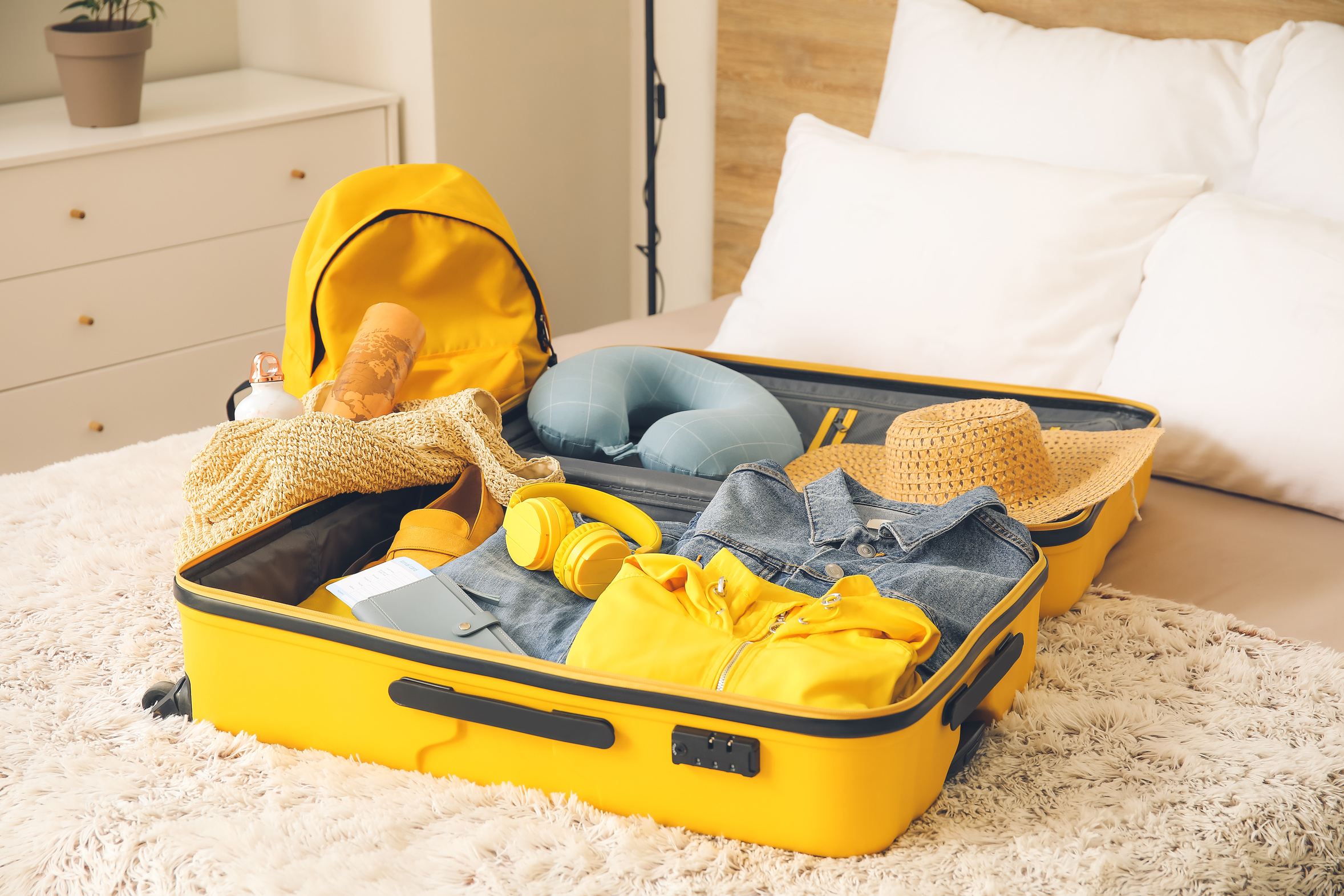
The suitcase is usually where it lands. You are folding sweaters for a house three hours away, or a flight away, and it occurs to you that you will be grieving your baby in a bedroom that is not yours, on a schedule somebody else set, in a house where you cannot be sure of finding a door you are allowed to close.
Most of what gets written about the holidays after a loss assumes you will be at home. It talks about your traditions, your table, the room you can go sit in when you need to. None of that is yours when you are the guest. The photograph you look at every night, the blanket, the quiet corner where nobody asks you anything, all of it stays behind unless you put it in a bag on purpose.
This is for the mother who is less than a year out and about to spend Thanksgiving or Christmas in someone else’s home. Not because she wants to. Because the tickets were bought, or her partner’s family has done it this way for thirty years, or there is a child at home who still believes in all of it. What follows is practical, and it assumes you have already decided to go.
What changes when the house is not your own
It helps to name the specific thing that makes this harder, because it is not simply that there will be relatives. At home, grief has somewhere to go. You know which room gets the afternoon light, which chair you cry in, how long you can shut the bathroom door before anyone notices. You have built that, probably without meaning to, over the last however many months. Being a guest takes all of it away at once and replaces it with other people’s timing.
You also lose the ability to leave. At home, a conversation that goes wrong ends when you walk into the kitchen. In someone else’s house there may be no neutral room, nowhere out of earshot, and no obvious reason to give for standing up from the table. Most of what follows is about rebuilding those two things, a place to go and a way to leave, in a house not designed to give them to you.
What to put in your bag before anything else
Many bereaved parents find it steadies them to bring one physical thing that belongs to their baby, or to the time they were pregnant. Not a box of everything. One object, small enough to fit in a coat pocket or a nightstand drawer.
What women tend to choose: a printed photograph rather than one on a phone, since a phone can be handed around by accident. A hospital bracelet. The ultrasound picture folded into a book. A piece of jewelry with a name or a date on it, which has the advantage of being wearable, so it travels from room to room and needs no explaining to anyone.
Keep it with you rather than in checked luggage or the trunk. The point is that you can reach it at eleven at night in a strange room, and a bag elsewhere in the house does not do that.
A few other things worth the space: headphones, since music is one of the few socially acceptable ways to be unreachable in a full house, a book you have already read, and whatever helps you sleep at home. A strange bed and a hard day together tend to make for a long night.
Who should know before you walk in?
One of the kindest things you can do for yourself is to arrive with something already arranged, rather than hoping the house will read your mind. That usually means a message sent a few days ahead to the person whose house it is, or to whoever in the family is most able to hear you.
It does not have to be long. Something close to: “We are looking forward to seeing everyone. I am still having hard days, so I may step out here and there. It isn’t about anyone, so please don’t worry if I disappear for twenty minutes.” That one text does a surprising amount of work. It gives you permission in advance, so you are not asking for it in the moment, in front of people, while already struggling.
If there is one specific thing you need, ask for that too, plainly and small: a room you can use when you need to, or that nobody announces anything at dinner without telling you first, or that your baby’s name is said at the table, or that it isn’t. You are allowed to want either one.
It also helps to have one ally there. Your partner usually, or a sister or a cousin, who knows the plan and will come find you, change the subject, or carry a plate to you unasked. Grief is far more survivable in a crowd when one other person knows what is happening.
The first hour is usually the hardest part
Arrival is where the questions come. People hug you in a doorway with their coats still on and say the thing they have been rehearsing for weeks. How are you doing, really. Are you two going to try again. It comes fast, before you have put your bag down, from people who mean well and have no idea what they are doing.
Having two or three sentences ready, worn smooth from use, is much easier than deciding what to say each time. “Some days are better than others. Thank you for asking.” “I’d rather not get into it today, but I appreciate you.” Then a question back, because a question moves the conversation off you: how was your drive, can I help with anything. You are not being dishonest by declining to open the whole of it in a hallway. You are choosing where and with whom you do that. There is more on this in how to respond when people say the wrong thing.
If you can manage it, take fifteen minutes alone before the first hour begins. Sit in the car in the driveway. Arriving already depleted is what makes the doorway so hard.
Where to put your grief in a house with no room for it
You will need somewhere to go, and in most houses full of family, it will not be obvious. Women who have done this name the same handful of places: the car, which is private, has a door, and needs no explanation if you say you forgot something. A walk around the block, which is the most reliable excuse in existence and gets better if there is a dog. The grocery store, for one item somebody definitely needs. The laundry room. The back steps. A shower, run long.

Early morning is worth knowing about. In a house where everyone else sleeps in, the hour before anyone is up can be the only unguarded time of the whole visit, and some mothers find they would rather be awake at six with coffee and a window than asleep and then surrounded. It is a lonely kind of quiet, but it is quiet, and it is yours.
You do not owe anyone the full day either. Three hours at a gathering is real attendance. Lying down in the afternoon while the football is on is not rude, and most families absorb it without comment if you simply go rather than ask a room of people for permission.
When there is a pregnancy or a new baby in the room
Holiday gatherings are where families make announcements, and they are also where the cousin who is due in March will be sitting across from you with her hand on her belly for four hours. If you know in advance, the knowing is worth a lot. If you can ask your ally to find out quietly, it is better to arrive braced than to be hit with it over dessert.
You are not required to hold the baby. You can say, warmly and without explaining, “not right now, but she’s beautiful.” You can leave the room when the baby is passed around, and come back in ten minutes. If you want to hold the baby and then find it undoes you, that is also normal, and it does not mean you should not have. Meeting someone else’s new baby after losing yours goes further into this.
Can you leave early?
Yes. And the decision is much easier if you build the exit in before you go rather than trying to construct one on the second night while crying in a guest bathroom.
That can mean driving separately so you are not held to anyone else’s timing. Booking a hotel nearby instead of the guest room, which costs money but buys you a door and the ability to go at nine. Saying two nights when you are asked for four. Telling the host at the start, lightly, that you may head back Saturday, so leaving is not a scene but a plan everyone already heard.
If you do leave early, you are likely to feel guilty in the car. That is worth expecting rather than being surprised by. It passes faster than the exhaustion of staying would have.
Marking the day from somewhere that isn’t home
If you have something you do for your baby at home, you can usually bring a smaller version of it with you. A battery tea light on the nightstand of a guest room, left on all night, asks nothing of anyone and is nobody’s business. A photograph propped against the lamp while you are in that room. Writing to your baby in a notebook before you come down for breakfast. Saying their name out loud once, in the car, with the radio off.
Some mothers text one person their baby’s name on the day, somebody who will write back, which turns a private thought into something witnessed. Some step outside after the meal and stand in the cold for two minutes. It tends to matter more than its size would suggest, because it means the day contained them. If you are thinking about what you do at home, making room for your baby at home during the holidays and getting through Thanksgiving both sit alongside this one.
The drive back, and the day after
The way home can be heavier than the visit. You held yourself together for three days, and the car is the first place it is safe to stop. Many women cry on the drive back, or feel nothing at all, or sleep for eleven hours once they are through their own door.
If it is possible, leave the day after empty. No plans, no errands, nobody coming over. Coming back into your own rooms after a stretch of performing in someone else’s is a real re-entry, and it goes better with an unclaimed day on the other side of it.
If the visit left you in a worse place than it found you, or if the weeks after feel flat and immovable in a way that does not lift, that is worth telling a professional who works with perinatal loss. Groups and counselor referrals are available through organizations like Share Pregnancy & Infant Loss Support, and talking to someone who does this work is not a sign that you are handling it badly.
Whatever you end up doing, staying the weekend or leaving Saturday morning, you will be carrying your baby through a house that does not know how to hold them. That is a hard assignment, and doing it imperfectly reflects nothing on how much you love them. There are other mothers this month packing one small thing into a side pocket, and sitting in parked cars in driveways, and standing outside after dinner in the cold for two minutes. You are in better company than the house will make it feel.






Leave a Reply