

Memorial Jewelry for Your Baby: Choosing It, Wearing It, and the Days You Take It Off
A necklace is a small thing to decide about. It does not feel small.
Maybe someone has already given you one and it is still sitting in the box it came in. Maybe you have had the same few tabs open for weeks, putting something in a cart at eleven at night and then closing the laptop without ordering. Maybe you had not thought about it at all until a friend asked what you wanted, and now you cannot stop thinking about it.
This is about memorial jewelry for baby loss: how to choose a piece, what to put on it when there is almost nothing to put, and what it is actually like to wear something every day that carries your baby with it. Nearly everything written on this subject was written to sell a necklace. This is not that. There is nothing to buy here, and no right answer waiting at the end of it.
What counts as memorial jewelry
The category is wider than the search results make it look. A piece can carry your baby’s name, or a single initial, or a date. It can hold a birthstone for the month they were born, or the month they were due. It can be a shape that means something only to you and would look like an ordinary charm to anyone else: a small star, a forget-me-not, a shell, a bird, a plain gold bead on a chain.
If you have prints, some jewelers can cast a footprint or a fingerprint into metal. Some pieces are made to hold something inside them: a lock of hair, a few grains of ash, a thread from a blanket. Others are not new at all. Plenty of mothers wear a ring they already owned on a different finger, or have a grandmother’s stone reset, or put a charm on a bracelet they have had for years.
There is no hierarchy in any of this. A piece that holds ashes is not more serious than a plain band. A custom engraving is not more loving than something small you found in a shop and knew immediately.
What do you engrave when there is almost nothing to engrave?
This stops more mothers than anything else. If your loss was early, you may have no birth date, no weight, no name you had settled on, and a due date that now belongs to a day that will not happen. The engraving field asks for information you do not have.
Some of what other mothers have chosen, when the usual details were not there to give:
- The year alone, with no month or day attached to it.
- The birthstone for the due month, worn for the month that was supposed to be theirs.
- The date they found out they were pregnant, which is a real date and often the happiest one.
- A single letter, chosen later, sometimes years later.
- One word that is not a name.
- Nothing. A blank piece, on purpose, because the blankness is the truest part.
It helps to know that most of this is not permanent in the way it feels right now. Many jewelers will add an engraving to a piece later, or add a second stone, or re-string a bracelet to make room. If you are not ready to choose a name or a date, you can buy the piece plain and leave the space. If you have been circling the question of a name itself, there is more on that in how to memorialize an early miscarriage when you have nothing to hold.
And if the dates you have are uncertain, you are allowed to pick the one that feels true rather than the one on the paperwork. No one is checking.

How do you choose something you can actually wear every day?
This is the part almost nobody writes about, and it is the part that decides whether the piece ends up on you or in a drawer.
Think about where it will sit. A shorter chain sits above a collar and will be seen. A longer one disappears under a shirt, which some mothers want very much and others cannot stand. Weight matters too. A heavier pendant swings and taps and reminds you of itself all day, which is either the whole point or exactly what you cannot bear, and only you know which.
Then the practical things, which are worth asking before you order rather than after:
- Can you fasten it alone? Tiny spring clasps are difficult with one hand, and harder still if you are holding a child while you do it.
- What is it actually made of? Sterling silver tarnishes and will want polishing. Solid gold and gold fill hold up for years. Plated pieces wear through, often within a year, and the engraving goes with the plating.
- Can it get wet? Resin and pressed flower pieces usually cannot. Lockets that hold ashes or hair should not be submerged. If you want something you never have to take off, say that to the maker before you buy and let them steer you.
- Can it be repaired? Ask directly: if the chain snaps, will they replace just the chain? If a stone comes loose, will they reset it, and what does that cost? A piece you will wear for decades will need this eventually.
- Will they send a proof of the engraving? Ask for a layout image before it is cut. Spelling matters more here than on anything else you will ever order.
- How long will it take? Custom work can run weeks. If you want it in your hand for a particular day, a due date or an anniversary or a service, order with far more room than seems necessary and ask the maker outright whether the date is realistic for them.
If the piece is made to hold ashes, ask who fills it. Some makers fill it for you, some send it empty with a small funnel and expect you to do it at your kitchen table, which is a moment worth being prepared for rather than surprised by. Many families ask their funeral home to do the filling and sealing instead. Ask what the seal is, and whether a second, unfilled piece is available in case the first is ever lost.
When someone else chose it for you
Sometimes the first piece you own is one you did not pick. Someone who loves you wanted to give you something, and they chose a style you would never have chosen, or wording that sits wrong, or a symbol that means nothing to you.
You do not owe anyone a certain number of days of wearing it. You can keep it in the memory box and never put it on. You can wear it only on the days you see that person, and only if that feels like warmth rather than performance. Later, quietly, you can have a stone reset or a chain changed into something that is yours. None of that is ingratitude. The gift was the gesture, and you already received it.
If someone asks what you would like, you are allowed to say you would rather choose it yourself when you are ready, and you are allowed to send them a link instead. Neither is rude. If the thank you is weighing on you, there is more on that in thank you notes after baby loss.
People will notice it, and some of them will ask
A stranger at a checkout will say it is pretty. A coworker will lean in to read the engraving before it occurs to her not to. Someone at a school pickup will ask whose initial that is, cheerfully, with no idea what she is asking.
It helps to have answers of different sizes ready, so you are not building one from nothing while someone waits. A short one: thank you, and nothing more. A middle one: it is a memorial piece. A whole one: it is for my son, and then his name. You can use a different size on a different day, and the day you say the shortest version is not a day you loved him less. Many mothers find that wearing the name is the thing that lets them start saying it, and there is more on that in saying your baby’s name out loud after loss.
Some of the responses you get will be clumsy. If one of them lands badly and you are still turning it over hours later, how to respond when people say the wrong thing may help.
The days you take it off
There will be days you do not put it on, and there is a particular guilt that comes with that. It can feel like a measurement, as though the wearing is the proof and the not wearing is a failure of love.
It is not a measurement. Mothers take it off to swim, to sleep, to work with their hands, because a baby pulls at it, because the clasp broke and the repair takes three weeks. Mothers also take it off on days when they simply cannot answer one more question at a checkout, and that is as good a reason as any of the practical ones. The necklace is not doing the remembering. You are, all day, whether or not it is around your neck.
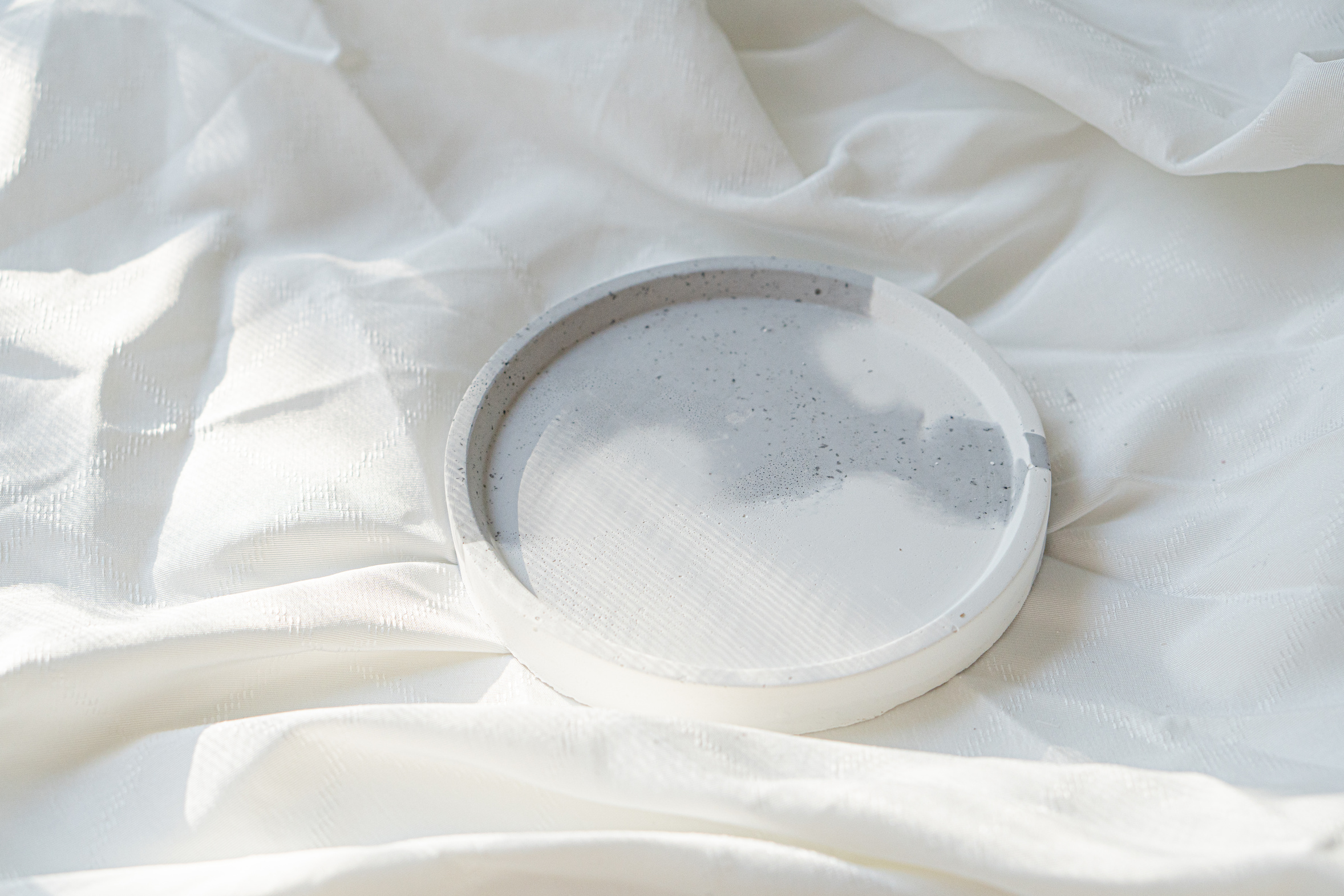
What helps is having one place it always goes: a small dish on the nightstand, a hook by the sink, the memory box if that is where it belongs. The fear of losing it is its own weight, and a consistent place lifts some of that. It is worth checking the clasp and the jump ring every so often, since those are where chains give out, and a piece this important is worth a two second look while you fasten it.
And if it does get lost, which does happen, the grief that follows is real and sharp and out of proportion to the object, and it is not out of proportion at all. You can replace it. You can also choose not to. Your baby was never inside the metal.
What if you do not want to wear anything at all?
Then do not. Some mothers cannot stand the feeling of something at their throat, especially in the first months, when the body is already sending too many signals. Some find that a piece worn on the body keeps the loss in the room when they are trying to get through a workday.
There are ways to carry something that do not involve wearing it. A charm on a keyring, so it is in your hand every time you leave the house. A small object in a coat pocket for the winter. Something clipped inside a bag where only you know it is there. A piece that lives on a shelf or a hook at home and is not carried anywhere, which is closer to a remembrance space than a piece of jewelry, and no less real for it.
Some mothers want permanence in a form that cannot be taken off or lost at all, and choose ink instead. If that is where your mind keeps going, a memorial tattoo for your baby covers how to think that one through.
And some mothers want none of it, not now and not later, and that is whole on its own. Wanting no object is not the same as having nothing to remember.
If the decision keeps stalling
It is common to sit with this one for a long time. The piece feels like it has to be right, because it is standing in for something that cannot be gotten right, and so the cart stays full and nothing gets ordered for months.
There is no deadline. The engraving can be added later, the chain can be swapped, the first piece does not have to be the only piece, and plenty of mothers are on their second or third and wear all of them. If it would help to hear how other parents made this decision, organizations like Share Pregnancy & Infant Loss Support run peer groups where this kind of question comes up often.
Whatever you end up with, whether it is a name in gold or a plain band or an empty space on a shelf where you thought a necklace would go, it will not be the thing holding your baby. You are. It is just something to put your hand on while you do it.





Leave a Reply