
Creating a Remembrance Space for Your Baby at Home
There is a particular ache that comes from carrying so much love and having nowhere obvious to put it. You made room in your life and your body and your heart for your baby, and now the world seems to expect you to fold that room back up as though it was never there. Many mothers find that setting aside a small, deliberate place at home, a space that belongs to their baby, gives that love somewhere to rest.
This is for you if you have wanted a spot in your home that holds your baby’s memory but were not sure where to begin, or whether you were even allowed to. You are. A remembrance space does not have to be large or finished or beautiful. It can be a single shelf, a windowsill, one corner of a dresser. What matters is that it is yours, and theirs, and that you can return to it when you need to.
What a remembrance space actually is
A remembrance space is a small area inside your home that you set apart to hold your baby’s memory. It is not a gravesite, and it is different from a memorial garden that lives outdoors in the weather and the seasons. This one lives where you live, close to your everyday hours, somewhere you pass by in your slippers with your coffee going cold.
Some mothers keep the space out in the open, in plain view. Others keep it tucked into a drawer or a closet shelf, private, opened only when they choose. Neither is more loving than the other. There is no correct size, no required objects, no point at which it becomes official. It is a place you make because your baby was real and your missing is real, and both deserve somewhere to live.
Where in your home it might live
The bedroom is a common choice because it is private and because the hardest hours often come at the edges of the day, first thing in the morning and last thing at night. A shelf on your side of the bed, or a small table by the window, puts the space within reach when you wake and when you cannot sleep.
Other mothers place it in the living room, somewhere in the shared life of the house, as a quiet way of saying that this baby is part of the family and not a secret. A mantel, a bookshelf, a windowsill that catches the afternoon light. Think about who else moves through the room, how much you want it seen, and how it will feel to walk past it on an ordinary Tuesday. You are allowed to try one spot and move it later. Nothing about this has to be permanent on the first attempt.

What you might place there
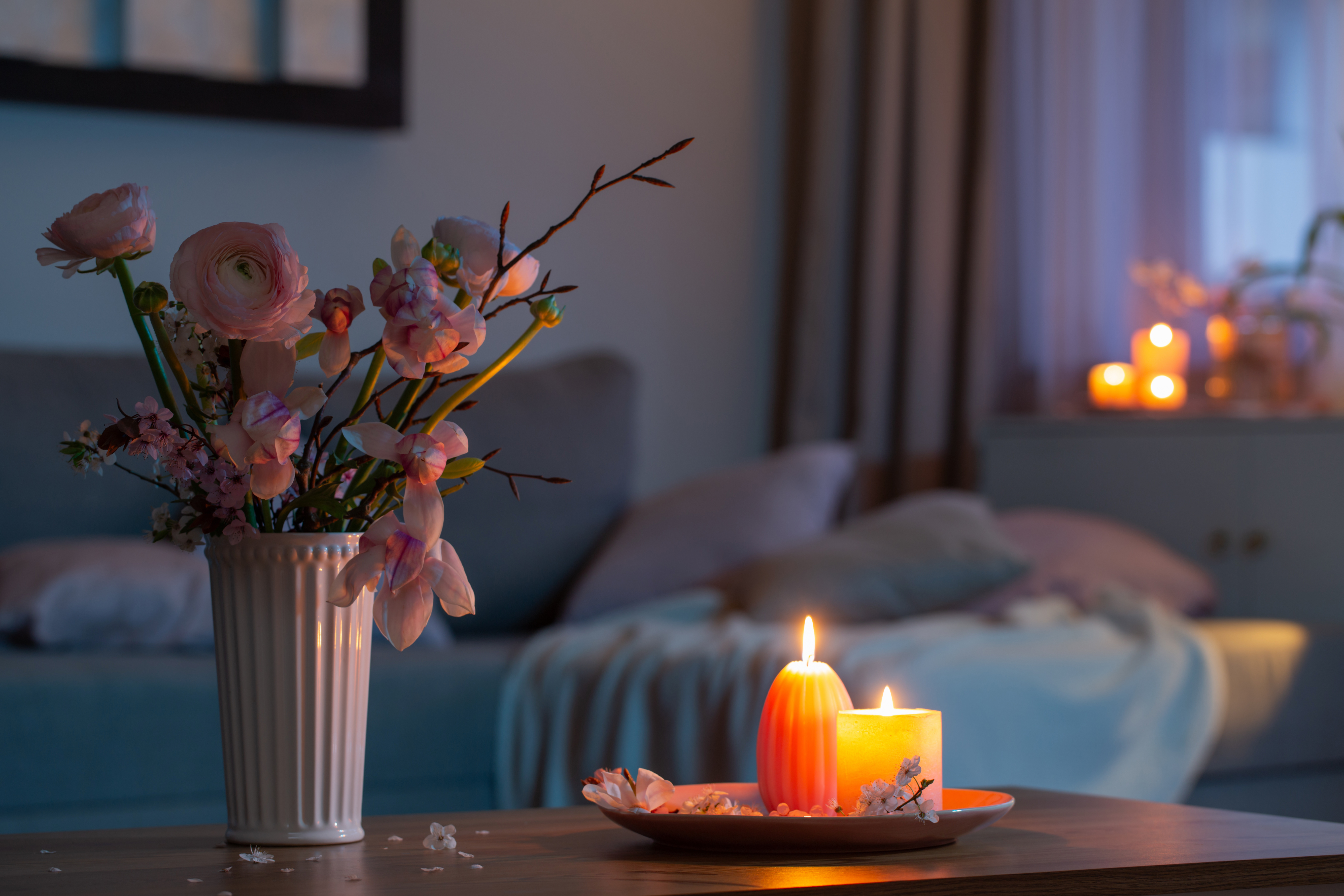
Whatever you choose belongs there because it means something to you, not because a list said so. Many mothers include an ultrasound photo, a hospital bracelet, ink or clay prints of tiny hands and feet, a lock of hair. A candle is often at the center, something to light. A small plant or a few cut flowers bring something living into the space. A stone, a shell, a piece of jewelry, an object you had already bought for your baby before you lost them.
Their name matters more than almost anything, so many mothers write it, print it, or have it engraved on a small plaque or a smooth stone. If you have written your baby a letter, it can rest here too. And if you have gathered keepsakes into a memory box, the space can hold the box or sit gently beside it. This is not about filling shelves. One candle and one name is a remembrance space. So is a whole cabinet. The measure is meaning, never quantity.
If your hands feel empty
When a loss comes early, there may be very few physical things to hold, and that absence can carry its own grief. You can still make a space, and it can still be full. A candle and your baby’s name is enough. A small note with their due date. Something chosen on purpose to stand for them: a particular flower you love, a color that feels like theirs, a single small object that your heart attaches to.
A remembrance space can be built almost entirely of intention. The meaning does not come from how much you can display. It comes from the decision to make a place at all, to say here, this corner, this is where I keep you.
Making it a place you can return to
A space becomes a comfort when it becomes a habit. Lighting the candle each morning, sitting with it for a minute while the house is still, saying a few words or none at all. Some mothers pause there every day, some only on hard days, some mostly on birthdays and anniversaries. All of that is right. The point is having somewhere to go with the feeling instead of carrying it loose.
Grief often gets louder at night, when the distractions fall away and the house goes quiet. If you find yourself awake and aching, a remembrance space gives you somewhere to move toward at two in the morning, a candle to light, a photo to hold, rather than lying in the dark alone with it. If the nights are especially heavy for you, you may find some company in what other mothers have shared about grief that worsens after dark.

When you share your home with others
If you live with a partner, they may relate to the space differently than you do, and that difference is not a problem to solve so much as two people grieving in their own shapes. It can help to decide together what stays visible and what stays private, so the space feels safe for both of you. Some couples tend it together on anniversaries. Sometimes one person keeps it and the other simply knows it is there.
If you have a living child, they may notice the candle and ask about it, and a remembrance space can quietly give you a way to answer, a small place where their sibling is part of the family. You get to decide how much to share and when. The space can hold everyone, or it can hold only you.
If you are not ready yet
Some mothers want to make a space within days. Others cannot bear to for months, or years, and only feel the pull much later. There is no schedule you are behind on. If the thought of gathering these things feels like too much right now, that is information, not failure, and you can let the idea wait.
If your grief feels heavier than you can hold on your own, please reach for real support alongside anything you make at home. Organizations like Share Pregnancy and Infant Loss Support offer companionship and resources for exactly this kind of loss, and a grief counselor who understands bereavement after pregnancy or infant loss can sit with you in a way a shelf cannot.
However your space takes shape, whether it becomes a shelf you dust each morning or a single candle you light when the missing gets loud, it is a way of saying that your baby was here, that they are still yours, that the love did not end when they did. You do not have to build it today. It will be there when you are ready, and so will they.






Pingback: The Wave of Light on October 15: Gentle Ways to Take Part at Home - Our Healing Home