

The Wave of Light on October 15: Gentle Ways to Take Part at Home
Every year on October 15, at seven in the evening, people light a candle and leave it burning for an hour. Because seven o’clock arrives in one time zone after another, the light keeps moving west, so that for a full day and night there is always a candle burning somewhere in the world for a baby who died. It is called the Wave of Light. If you have never heard of it until this year, you are not behind and you have not missed anything. Most mothers find out about it by accident, usually while looking for something else entirely.
October is Pregnancy and Infant Loss Awareness Month, and October 15 is Pregnancy and Infant Loss Remembrance Day. That sounds very official for something that is, in practice, one candle on a kitchen table. What follows is for the mother who wants to mark the day quietly at home, without a public post, without a ceremony, and without having to explain herself to anyone. If your loss is recent, this may be the first date anyone has offered you that belongs to your baby. That can feel like relief and like weight, both at once.
What the Wave of Light actually is
The Wave of Light began in 2003 as a way for bereaved parents scattered across the world to do one small thing at the same time. The instructions have never grown more complicated than this: at 7pm your local time on October 15, light a candle, and leave it burning for at least an hour.
The date itself has a longer history. In 1988, October was proclaimed Pregnancy and Infant Loss Awareness Month in the United States. In 2001, three bereaved mothers began petitioning for a specific day of remembrance, and October 15 was recognized by a congressional resolution in 2006. Other countries followed over the next two decades. In the UK and elsewhere, Baby Loss Awareness Week runs in the days beforehand and finishes with the Wave of Light on the fifteenth.
Some people photograph their candle and post it with the hashtag #WaveOfLight. Some join a livestream held by a baby loss organization. Many more light a candle in a quiet room and tell no one at all. All of that counts equally, because there is no one keeping score.
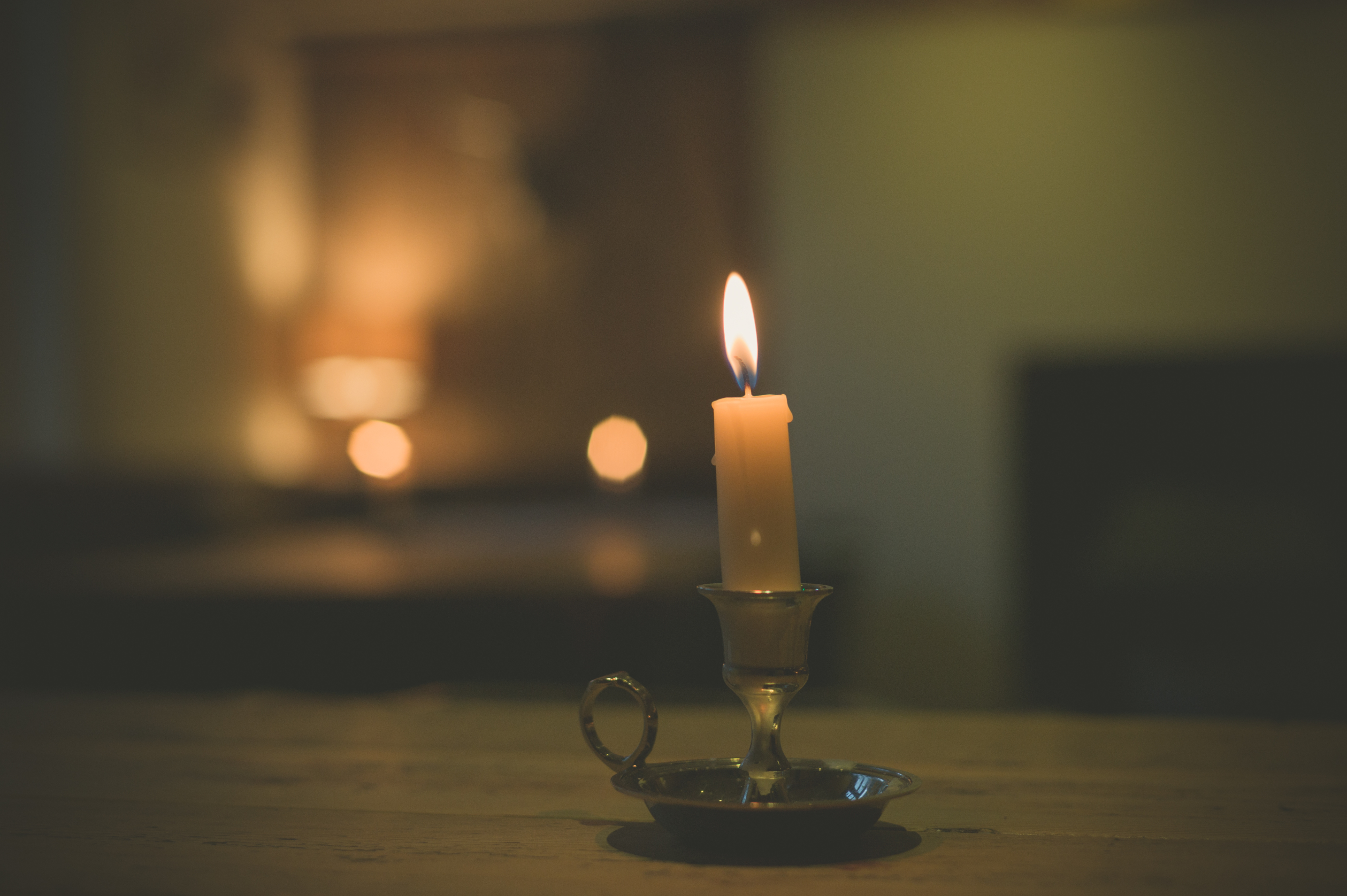
Nothing here is required of you
It is worth saying early, because the internet in October can start to feel like a set of instructions. Some mothers find the day steadying, a rare hour when their grief is expected rather than tolerated. Others find that a designated day makes something private feel suddenly public, and would rather let October 15 pass like any other Wednesday.
Both of those are whole responses, not partial ones. Skipping the day is not a failure to remember your baby, and lighting a candle is not proof that you are doing grief correctly. You may also find that you want to take part one year and not the next, which is worth knowing in advance so it does not catch you off guard later.
The simplest version is one candle and one hour
You do not need a memorial candle, an engraved holder, or anything ordered in advance. A tea light from the back of a drawer works. So does a birthday candle in a saucer of rice, or the half burned jar candle already sitting on your shelf. If you have small children in the house, or animals, or you simply do not want an open flame in a room where you might fall asleep, a battery candle does the same job. The light is the point, not the wax.
A few practical things that tend to help. Set an alarm on your phone for a few minutes before seven, because the day can slip away from you and it is a strange kind of sadness to look up at nine and realize you missed it. Decide beforehand roughly where you will be. And give yourself permission to be doing something completely ordinary while the candle burns, because an hour is a long time to sit and feel something on purpose.
Choosing where the candle goes
A windowsill is the traditional spot, partly because it means the light faces outward and joins the others, and partly because on a dark October evening you can see it from the street. That appeals to some mothers very much. If it makes you feel exposed, put it somewhere the house holds it more closely instead.
The kitchen table works, particularly if that is where your family gathers anyway. So does a bedside table, or the arm of the chair you sit in at night, or beside a scan photo, or in a remembrance space you have already made at home. If you have a garden and the weather is kind, a candle in a jar outside is beautiful, though October wind tends to have opinions about that.
Small things to do while it burns
An hour with nothing planned can feel enormous. It can also be exactly what you need. If you would rather have something to hold onto, here are things other bereaved mothers have found bearable and even good:
- Say your baby’s name out loud, once, in a room where nobody will ask you to explain it.
- Write to them. A few lines is enough, and there is a longer piece here on writing a letter to your baby if you want somewhere to start.
- Look at the photos, scan images, or hospital paperwork you have, if that is something you can do without it taking the whole evening from you.
- Play one song. Just one, chosen in advance, because searching for the right song while crying is a particular kind of misery.
- Let older children draw a picture or choose the candle. Children often take to this far more easily than adults expect.
- Sit and do nothing at all. Watch the flame. Drink something warm. That is a complete way to spend the hour.
- Take one photo of your candle for yourself, whether or not you ever share it.
What if seven o’clock is the worst possible hour?
For a great many mothers it is. Seven is bath time, or the middle of a shift, or the moment three people need dinner, or the hour your partner is still driving home. The synchronized part of the Wave of Light is lovely, and it is also not the part that matters most.
Light it at six, or at half past nine when the house has finally gone quiet, or in the morning before anyone is awake. Light it on the fourteenth if the fifteenth is unmanageable. Somewhere in the world the candles are burning for most of a day and a half by the time the wave finishes, so you are genuinely not outside of it.

When the people around you do not know the date exists
Most of them will not. October 15 is not on anyone’s calendar unless they have a reason to put it there, which means the day can arrive with a silence around it that stings more than you expected. Waiting to see who remembers is usually a painful way to spend an evening, and it is often kinder to yourself to tell people plainly rather than to test them.
If you want to say something, short is fine. Something like: “October 15 is a day of remembrance for babies who died. I am lighting a candle at seven. You are welcome to light one too.” That gives people a specific and doable thing, which is what most of them are quietly hoping for. If nobody responds, that says something about how badly people handle grief and nothing at all about your baby. There is more here on what happens when friends disappear after a loss.
You are also allowed to tell no one. A candle lit in an empty kitchen is not a lesser candle.
If you would rather not be alone with it
Many hospitals, hospices and bereavement charities hold remembrance services in mid October, some in person and some online, and most are open to anyone regardless of when their loss happened or how far along they were. Local baby loss support groups often organize something too. If you want to find what is happening near you, the Baby Loss Awareness Week and Sands pages are good starting points, and a search for your own city plus “pregnancy and infant loss remembrance” usually turns up more than you would guess.
Going to something like that can be steadying, and it can also be more than you have in you this year. If you get in the car and turn around in the parking lot, that was still a real attempt and it still counted.
After the candle goes out
The hour sometimes lands flatly. You light the candle, you wait to feel something enormous, and instead you notice that the kitchen needs wiping down. That is common and it is not a sign that something is wrong with how you love your baby. Grief keeps its own schedule and rarely turns up on cue.
Sometimes it goes the other way, and the wave arrives an hour or a day later, sideways, in the supermarket. If you can, leave the evening after loosely arranged. Something undemanding to watch, a bath, an early night, a person you can text. Marked days often cast a longer shadow than the day itself, which is true of the anniversary of a loss as well, and knowing that in advance takes a little of the sting out of it.
Some mothers keep the candle stub in a memory box afterwards, and light the same holder every year. Others put it away and do not think about it again until the following October. Either is a good way to hold it.
And if the day brings up something heavier than you can carry on your own, that is worth taking seriously rather than pushing through. A grief counselor, your doctor, or a perinatal loss support line can help, and asking for that is not an overreaction.
One small light, in whatever way you can manage
Whatever you do or do not do on October 15, your baby is already remembered every single day, in the most thorough way there is, by you. The candle does not create that. It only makes it briefly visible, and gives your hands something to do with a love that has nowhere obvious to go.
If you do light one this year, know that at that same hour there are thousands of other kitchen tables and windowsills with a small flame on them, in houses you will never see, kept by women who understand exactly what you are holding. You will not meet them. You are still in it together.






Leave a Reply