

Moving After Losing a Baby: Leaving the Home Where You Were Pregnant
Some mothers cannot walk past the closed door. Others cannot imagine ever leaving it. Both of those things are true in houses all over the world tonight, and neither one is the wrong way to live in a home where your baby was supposed to be.
If you are thinking about moving after losing a baby, or if a move is already happening whether you chose it or not, this is for you. There is no correct answer waiting to be uncovered, and nobody standing outside your life can tell you whether staying or going will be easier to carry. What there is: a few questions worth sitting with, and some practical things that have helped other mothers make the leaving, or the staying, more bearable.
Maybe your lease ends in two months. Maybe someone has started sending you listings. Maybe you have quietly begun to dread the window you used to sit by, or you cannot stand the thought of a stranger painting over that room. Whatever brought you to this question, you are allowed to not know yet.
Is it wrong to want to leave?
No. A house keeps things your mind never asked it to keep. The particular angle of light in the afternoon. The spot on the stairs where you stopped to catch your breath. The kitchen where you took the call. Grief lives in the body, and bodies respond to rooms, which means a house can set off the whole thing before you have had a conscious thought. Wanting to be somewhere your body can rest is not the same as wanting to leave your baby behind.
Your baby is not in the drywall. Not in the floorboards, not in the paint, not in the view from the window. Whatever you carry of them, you carry, and it goes in the car with you.
Is it wrong to want to stay?
Also no. For a lot of mothers, that house is the only place in the world where their baby was ever physically present. It held the pregnancy. It may have held them. Handing it over to people who will never know what happened in those rooms can feel like handing over the only proof.
Staying is not the same as being stuck. Some mothers stay for years and slowly make the house theirs again, one room at a time. Others stay a while and then go later, when going has stopped feeling like abandonment and started feeling like air.
The decision is not a verdict on how much you loved them
Whichever way you lean, someone will decide it means something. “A fresh start would do you so much good.” “You can’t outrun grief, you know.” Both of those get said to grieving mothers, usually by people who are uncomfortable and reaching for anything to fill the silence. Neither one is information about your situation.
There is no loyalty test buried in this. A mother who moves out within the month and a mother who keeps the room untouched for five years can love their babies exactly the same amount.
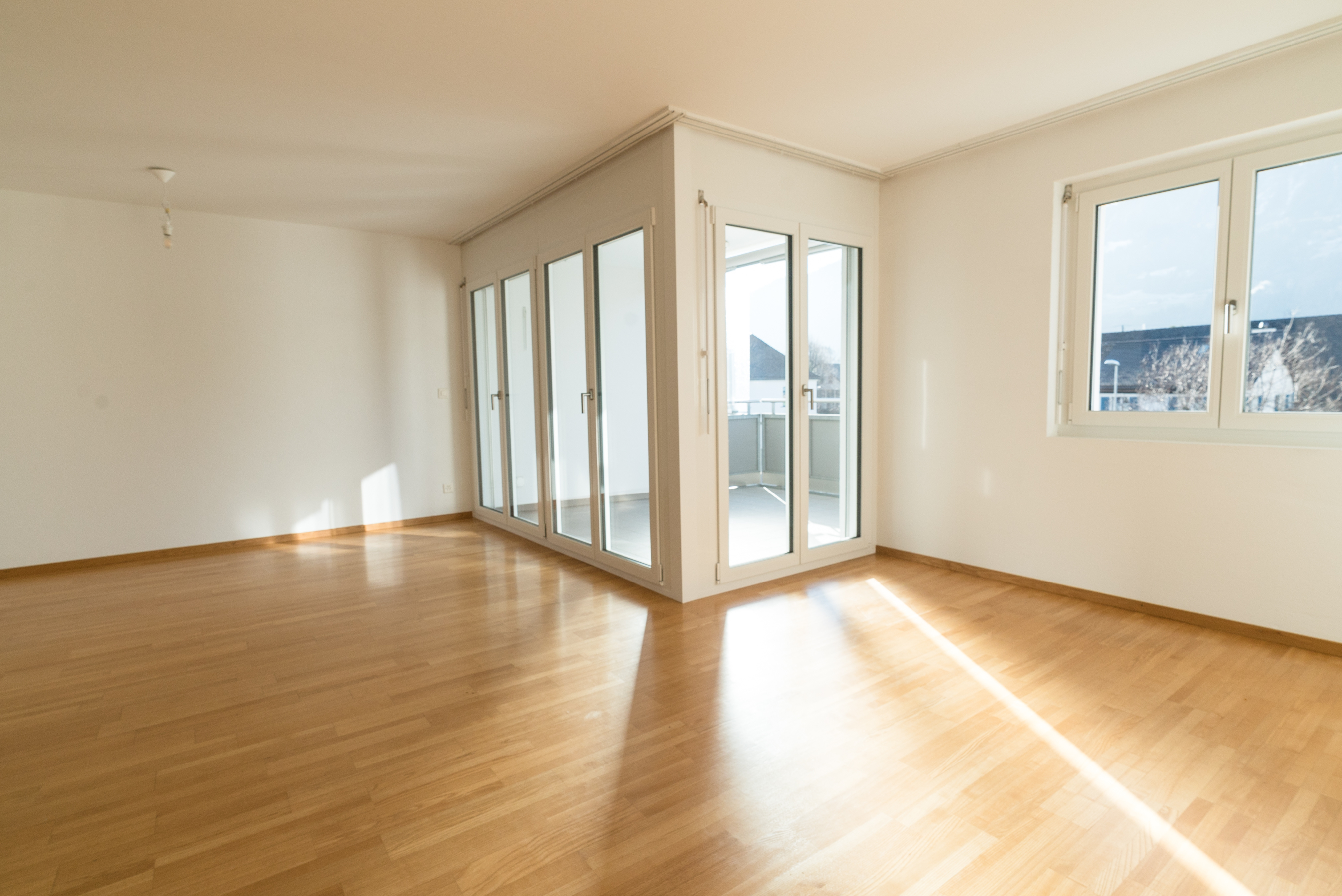
What other mothers have found worth doing before deciding
A few things that tend to help, when there is time for them:
- Separate the two questions. “Do I want to leave this house” and “do I want to stop feeling like this” are not the same question, and only one of them has a house-shaped answer.
- Name what you are actually trying to get away from. Sometimes it is the whole house. Sometimes it is one room, one route to work, one neighbor who still asks how the baby is doing. Smaller problems sometimes have smaller solutions.
- Sleep somewhere else for a few nights if you can. A relative’s spare room, a cheap motel, a friend’s couch. Notice what happens to you when you are out of that house, and notice what you find yourself missing.
- Give an irreversible decision as much time as your circumstances will allow. Early grief is not a reliable narrator of what you will want in a year. That is not a criticism of you, it is just what the first months do.
- Write your reasons down now, in whatever shape they arrive, and read them again in a few weeks. Seeing which ones still hold can be clarifying in a way that thinking in circles is not.
If after all of that you still want to go, that is your answer. It was always going to be yours to make.
When the move is not yours to choose
Sometimes the decision belongs to a lease, a landlord, a job, a separation, a number in a bank account. You may be packing a house you would have given anything to stay in, or staying in one you would leave tomorrow if leaving were possible.
That is its own particular grief and it deserves to be named rather than smoothed over. If you are being moved against your will, the small things matter more, not less. You may not get to choose the address, but you can usually choose what comes with you, what gets photographed before it goes, and how you spend the last hour in the room.
Taking the room with you
If you are leaving a space that was theirs, or was going to be, think about taking something of the room itself and not only what was sitting in it.
- Photograph it in daylight before anything is packed. The whole room, the corners, the view out the window, the doorway as you see it from the hallway. Mothers rarely regret having these pictures. A fair number regret not taking them.
- Write down the paint color, the actual name on the can if you can still find it. It costs nothing, and it means that room is reproducible anywhere you ever live.
- Keep something physical and small. A strip of the wallpaper, the doorknob, a square of carpet cut from inside the closet where no one will notice, a cutting or a bulb from the garden.
- Measure the room, or just the window. Some mothers find it steadying to know the dimensions of the space their baby was going to have.
- Record the sound, if the house had one. The specific creak of that door. Rain on that roof. Thirty seconds on your phone is enough.
If the room is still exactly as it was, what happens to it is a separate decision, and a move tends to force the two together before you are ready. You are allowed to refuse that. Pack what you cannot face sorting, label the box plainly, and let it ride in the truck unopened. There is no rule that a box must be dealt with on the day it arrives, or that year.
Before you hand over the keys
A last hour in an empty house is a strange and heavy thing, and it is worth deciding in advance what you want from it rather than letting it happen to you in a rush of cardboard and tape.
Some mothers sit on the floor of the room with the door closed and say their baby’s name out loud in that house one more time. Some light a candle and let it burn all the way down. Some write a name or a date on the wall in pencil before the new paint goes over it, somewhere nobody will ever see, and it is there anyway. Some open every window. Some stand in the doorway and have someone take their photograph.
And some do none of it, and lock the door and drive, because the day was eleven hours long and there was nothing left in them. That counts too. You do not owe the house a ceremony.

How do you make a new place feel like it knows your baby?
This is the part that catches mothers off guard. A new house can feel insultingly blank. Nobody in it has ever known, the walls hold no memory of you being pregnant, and the first night there can feel less like relief than like having left someone behind.
What seems to help is bringing the practice and not only the objects. If you had a place where their things lived, make that place first, before the kitchen is unpacked and before the beds are made. A shelf, a drawer, one end of a windowsill. Setting up a small remembrance space early, while the house is still boxes, seems to make the whole place easier to be in, maybe because it settles the question of whether they came too.
- Choose their spot on purpose instead of by default. In a new house you get to decide where they go, rather than inheriting a corner that happened by accident.
- Let the new place have its own version of things. The candle you lit at the old window can be lit at this window, and it is allowed to feel different here.
- Say their name out loud in the new rooms. For some mothers that is the moment the house stops feeling like a stranger’s.
- Keep their box somewhere you can actually reach. Deep storage has a way of quietly becoming permanent.
The weeks after the truck leaves
Grief often gets louder after a move rather than quieter, and almost nobody warns you. You may have expected relief and found something closer to panic instead. The versions that come up most: the absence of the triggers starts to feel like the absence of them. The new neighbors do not know, so every ordinary conversation becomes a decision about whether to say it. The old house exists now only inside your head, and you find yourself walking through it at three in the morning, room by room, checking.
None of that means you chose wrong. It usually means your body has registered that something changed and is making sure they came along. For most mothers it settles over weeks rather than days, and it settles faster when the new house has somewhere that is theirs in it.
If you want other mothers who understand, Share Pregnancy and Infant Loss Support keeps a directory of groups by state, including online ones, and an online group travels with you no matter which house you land in. And if the move has pushed you somewhere harder than sad, or you are not sure you are managing, a counselor who works specifically with pregnancy and infant loss is worth finding. Grief this size was never meant to be carried without anyone to hand some of it to.
Whatever you decide, the house was never the thing that held them. You were. Wherever you end up unpacking, they come with you: in the box you labeled so carefully, in the thing you do at the window, in the name you say out loud when the rooms are empty.
And if you are reading this on a mattress on the floor of somewhere new, or in a house you have not been able to walk through yet, there are more women awake tonight in half-sorted rooms than you would ever guess.






Leave a Reply